Welcome to Pansofic Mall Online Shopping Store!

Nov 27, 2025 / By Anjali Dhiman / in Natural Honey
Honey is often viewed as a simple natural sweetener, but authentic raw honey is much more complex than it appears. Each jar carries the imprint of its botanical source, the flowers the bees visit, the landscape in which the hive is placed, and the environmental conditions surrounding the nectar flow. These factors shape not only the taste and aroma of the honey but also its natural composition, nutrient density, and antioxidant profile.
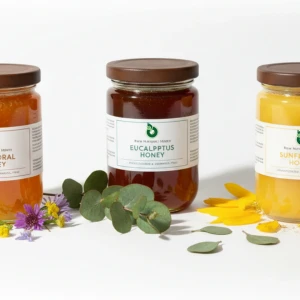
On Pansofic Mall, we work with vendors who maintain rigorous standards of sourcing and sustainability. OrganicFreshIndia is one such brand, supplying honey that is raw, unadulterated, and derived from specific floral environments. Their range, including Multifloral Honey, Eucalyptus Honey, and Sunflower Honey, provides an excellent example of how botanical origins influence the natural characteristics of honey.
This article explores the science behind botanical-origin honey, the distinct markers of each variety, and what modern research reveals about honey derived from specific floral sources.
Botanical-origin honey refers to honey produced predominantly from the nectar of certain plant species or groups of plants. This is not created through infusion or artificial flavoring. Instead, bees naturally collect nectar based on the dominant flowering plants available within a region.
Different flowers produce nectar with unique chemical signatures, variations in glucose and fructose ratios, trace minerals, pollen content, and phytochemical compounds. These attributes influence:
Due to these natural variations, honey from eucalyptus blossoms will never taste the same as honey from sunflower fields or mixed wildflowers. It is this diversity that allows consumers to choose honey based not only on flavour preference but on the inherent qualities associated with different plant sources.
Research published in journals such as Food Chemistry, Journal of Apicultural Research, and Phytotherapy Research has consistently shown that the botanical origin of honey significantly affects:
Raw honey contains natural enzymes such as glucose oxidase, invertase, catalase, and diastase, which contribute to its nutritional value. Heat processing and adulteration reduce these enzymes. OrganicFreshIndia’s supply chain focuses on preserving these naturally occurring compounds, ensuring the honey remains as close to its original form as possible.
With this context established, let us look at the three honey varieties Organic Fresh India offers and the real data behind their composition and qualities.
Multifloral honey, sometimes known as wildflower honey, is produced when bees forage from a wide range of flowering plants. Because floral conditions vary from region to region, each batch of multifloral honey is unique. This diversity is often considered a strength, multifloral honey carries a wide spectrum of pollens, micronutrients, and antioxidants.
Research Insight
Studies indicate that multifloral honey tends to have a higher antioxidant diversity compared to monofloral honeys because it contains phytochemicals from various plant species. These include flavonoids, phenolic acids, and natural volatiles. Researchers from the University of Agricultural Sciences (Bangalore) found that multifloral honey from Indian regions often shows elevated levels of quercetin and galangin, two antioxidant compounds associated with cellular protection.
In contrast to heavily processed commercial honey, raw multifloral honey from Organic Fresh India retains the floral complexity that reflects the ecosystem from which it originates.
Eucalyptus trees, known for their aromatic leaves and medicinal relevance, produce nectar that yields a strong and distinguishable honey. Eucalyptus honey has a long history in various cultures, particularly in regions where eucalyptus forests dominate local landscapes.
Multiple studies, including those published in Industrial Crops and Products, indicate that eucalyptus honey often exhibits high antimicrobial activity. This is partly attributed to its elevated phenolic content and the presence of naturally occurring compounds linked to eucalyptus nectar.
Eucalyptus honey also tends to have a higher mineral content, with measurable traces of iron, potassium, and manganese. Research conducted in South India shows eucalyptus-origin honey commonly contains higher diastase activity, a marker used to evaluate honey freshness and enzyme integrity.
This honey is especially valued by customers who prefer robust, less-sweet profiles with a noticeable botanical identity.
Sunflower honey is derived from the bright yellow fields of Helianthus annuus, a widely cultivated crop in India. Its nectar produces a honey that is light in color, gentle in taste, and nutritionally balanced.
Sunflower honey is known for its lower fructose-to-glucose ratio, making it prone to natural crystallization, a sign of purity rather than adulteration. Research from the National Dairy Research Institute (NDRI) and Indian agricultural universities shows that sunflower honey consistently displays:
Additionally, sunflower honey's lighter flavor makes it suitable for customers who prefer a subtler honey experience without heavy floral or herbal tones.
Sunflower honey is often the most approachable honey variety for first-time buyers.
When customers look for honey today, they are concerned about far more than sweetness. They look for authenticity, transparency, and minimal processing. OrganicFreshIndia’s approach aligns with these expectations:
Unlike generic supermarket honey—which is often blended, pasteurised, ultrafiltered, or derived from unspecified sources—botanical-origin honey reflects the true nature of the ecosystem. Each variety carries its own nutritional character and flavour profile.
Preference | Best Match | Why |
Balanced daily honey | Multifloral | Versatile flavour and diverse floral nutrients |
Strong, aromatic honey | Eucalyptus | Bold profile with herbal notes |
Light and mild taste | Sunflower | Clean flavour suitable for all ages |
Honey suitable for warm mornings | Multifloral / Sunflower | Both integrate well with warm liquids |
Honey for mature palates | Eucalyptus | Distinctive botanical identity |
When you understand honey through its botanical origin, you realise that each variety represents a different interaction between bees, plants, and the environment. OrganicFreshIndia’s Multifloral, Eucalyptus, and Sunflower Honey demonstrate this diversity clearly. These products offer customers more than sweetness; they provide a naturally occurring reflection of India’s floral landscapes.
For consumers seeking authentic, responsibly sourced honey, these varieties represent a trustworthy choice grounded in real plant ecology, not artificial enhancement. Pansofic Mall’s goal is to offer clarity, quality, and transparency, and partnering with vendors who prioritise raw, botanical-origin honey is a core part of that commitment.
1. What makes OrganicFreshIndia honey different from regular commercial honey?
OrganicFreshIndia honey is sourced directly from controlled apiaries where bees forage on specific floral environments. The honey is not heated, overly filtered, or blended with sugar syrups, practices common in commercial honey. As a result, it retains its natural enzymes, pollen content, and flavour profile tied to its botanical origin.
2. Is the honey raw and unprocessed?
Yes. OrganicFreshIndia provides honey in its raw form, meaning it is minimally filtered and never heated to the point where natural enzymes break down. This allows the honey to keep its original nutritional structure, including antioxidants and plant-derived compounds.
3. Why does honey from different flowers taste different?
Each plant produces nectar with a unique chemical composition. Factors like the ratio of glucose to fructose, presence of pollen, trace minerals, and specific floral volatiles influence the honey's colour, aroma, sweetness, and crystallisation pattern. Multifloral, Eucalyptus, and Sunflower honey each have distinct nectar sources, which is why their taste and texture vary naturally.
4. Does raw honey crystallise, and is crystallisation a sign of impurity?
Crystallisation is normal and indicates purity. Raw honey contains natural glucose that tends to crystallise over time, especially in varieties like Sunflower honey, which have a higher glucose ratio. This process does not affect quality and can be reversed by placing the jar in warm (not boiling) water.
5. What is the difference between Multifloral honey and monofloral honey like Eucalyptus or Sunflower?
Multifloral honey comes from a mix of nectar sources, giving it a balanced taste and broad nutrient profile. Monofloral honey is produced predominantly from a specific flower type, resulting in a more defined flavour and unique composition. Eucalyptus honey is bold and aromatic, while Sunflower honey is light and mild.
6. Is Organic Fresh India honey tested for purity?
Yes. Each batch undergoes standard quality checks including moisture levels, HMF (Hydroxymethylfurfural), pollen analysis, and enzyme activity tests such as diastase number. These indicators help verify that the honey has not been adulterated or overheated during processing.
7. Can these honey varieties be used for daily consumption?
Absolutely. Multifloral honey works well for everyday use because of its balanced taste. Sunflower honey is suitable for mild-flavour needs like morning warm water, and Eucalyptus honey appeals to those who enjoy stronger, herbal notes. All three are versatile and appropriate for daily nutrition routines.
8. Are these honey varieties suitable for children?
Children above 1 year can consume honey in moderate amounts. Sunflower honey is often preferred for younger palates due to its mild flavour, while Eucalyptus honey may suit older children or adults who are accustomed to bold tastes. Raw honey should never be given to infants below 12 months.
9. Why does Eucalyptus honey have a stronger flavour compared to other honey types?
The eucalyptus plant contains natural aromatic compounds that contribute to its distinct herbal and slightly medicinal profile. These volatiles are transferred into the nectar and retained in the honey, giving it a more intense taste compared to lighter varieties like Sunflower honey.
10. How should I store OrganicFreshIndia honey for best shelf life?
Store honey in a cool, dry place away from direct sunlight. Keep the lid tightly closed to avoid moisture absorption, as high humidity can cause fermentation. Raw honey does not require refrigeration and can naturally last for years if stored correctly.
Nov 27, 2025 by Anjali Dhiman
Nov 19, 2025 by Admin Pansofic
 Spiritual Items
 Nature's Nectar-Honey