Welcome to Pansofic Mall Online Shopping Store!

Feb 13, 2026 / By Admin Pansofic / in Ecommerce
Online selling has come a long way from the days when you simply had to list the products you were selling on a marketplace and wait for them to sell. Today, it is a strategic ecosystem with platforms, technology, logistics, trust, branding and customer psychology.
What makes online selling complicated and powerful, is choice.
Sellers today can sell:
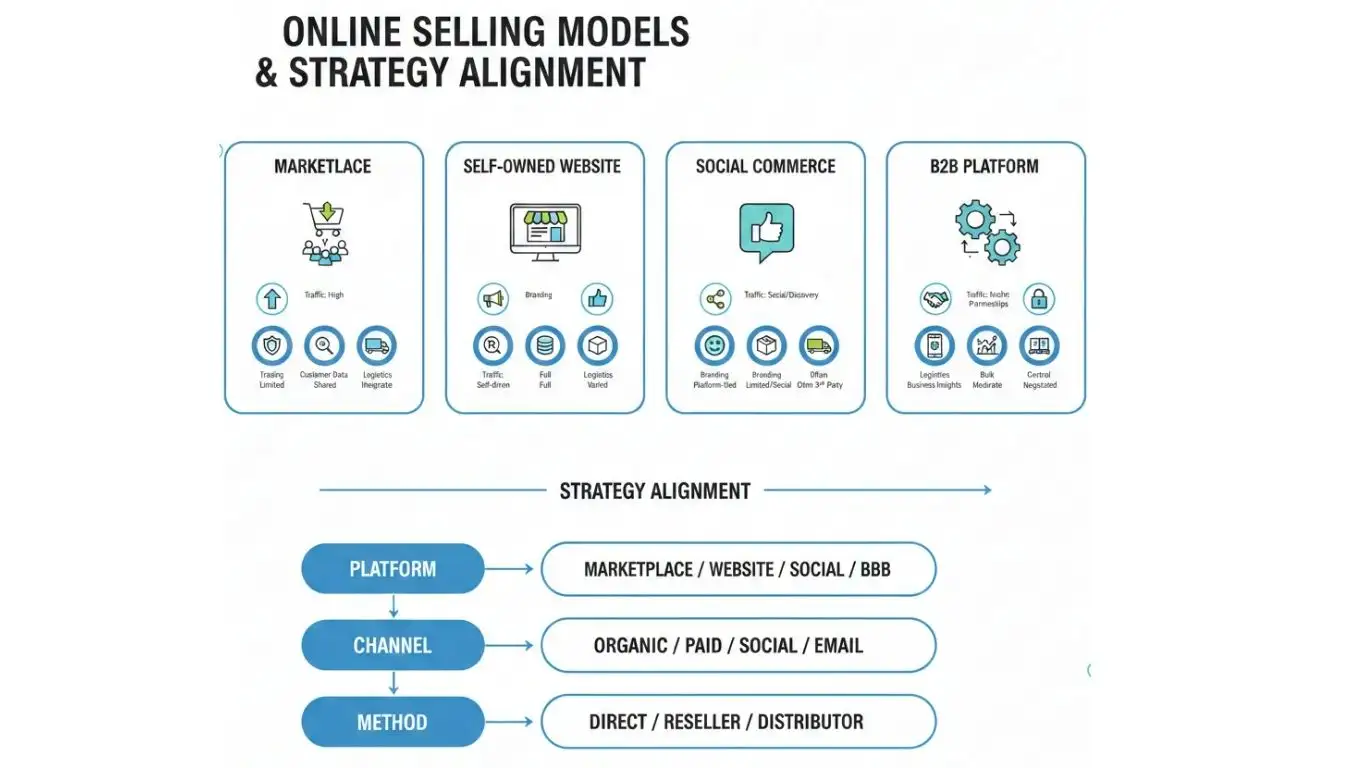
But, this freedom forms confusion. Many sellers fail, not because their product is wrong, but because they are on the platform where their method for their goals, the scale of their goals and their resources are different from business goal.
This guide takes the discussion of online selling platforms and methods down a notch from the technical and puts it into a strategic perspective. Whether you are a first-time seller, a growing brand or a business exploring new channels, this blog will help you to make your choice an intentional one - not a random one.
An online selling platform is not just a place to list things for sale. It is a pre-built commercial environment which controls:
Each type of platform works to solve a different business problem.
Before getting deeper, let's clear up some three terms that are often confused:
Successful online sellers design all three together.
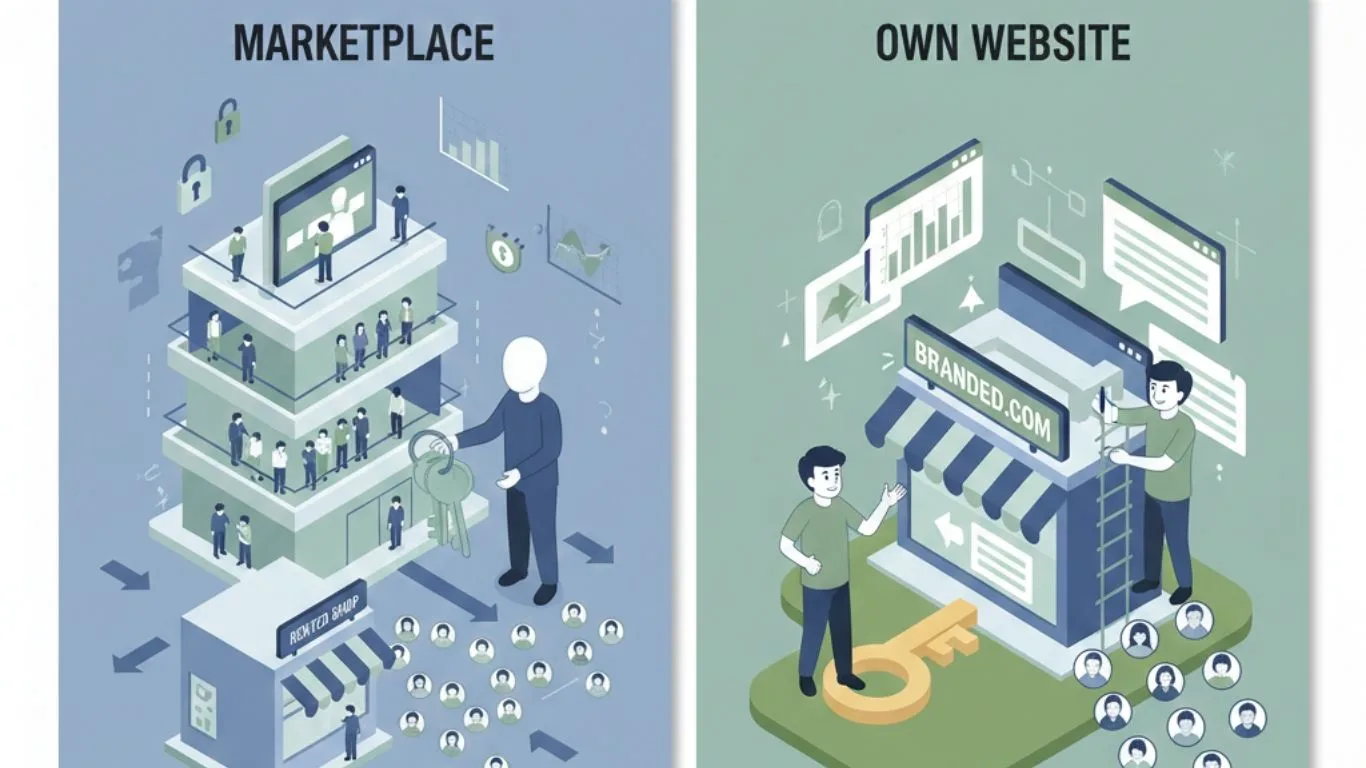
Online marketplaces - these shared commercial areas that numerous sellers operate under the same brand are created.
Marketplaces provide:
In return, sellers give up:
Marketplaces are ideal if:
Most sellers don't realize:
Marketplaces are great jump-off points, but rarely long term homes.
A self-owned website is not only a controlled digital asset, but also a store.
Owning a website means:
But it also means:
Websites are:
If the marketplaces are renting a shop in a mall, the websites are owning land.
Social commerce combines the three elements of content, community, and commerce.
Instead of customers searching for products, products find themselves inside content consumption.
Customer on Social platforms:
Social commerce is powerful - when paired with:
Messaging platforms have surreptitiously become high-conversion selling channels, especially in mobile first markets.
Messaging Selling is mimicking offline selling psychology in an online environment.
However it does not scale infinitely without having automation and systems.
B2B online selling is structurally different from B2C.
They digitize:
For manufacturers, wholesalers, and exporters- B2B platforms aren't just cutting sales friction, they cut costs.
Platforms are where you sell.
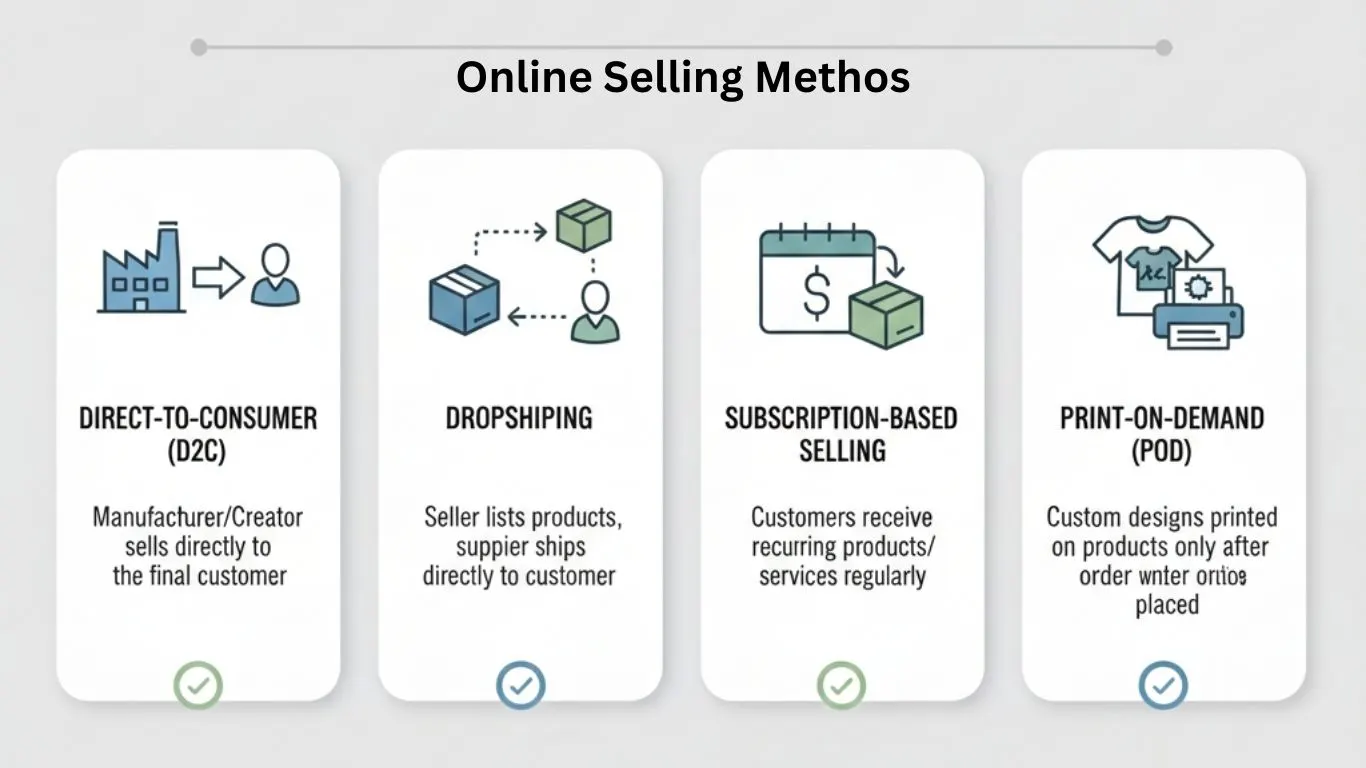
Methods are the ways in which your business is conducted.
D2C stands for selling directly to the end customer (with no intermediaries).
D2C ISN'T EASY - But it IS defensible.
Dropshipping separates the selling process from the stocking process.
Dropshipping fails when:
It succeeds when:
Dropshipping is a process and not a quick save.
Print-on-demand making creativity into inventories
One Time Buyers Become Recurring Revenue with Subscriptions
They demand:
Affiliate selling transfers the risk away from inventory.
Trust is the currency here. Without credibility, affiliate selling crumbles.
There is no "best" platform-only best alignment.
Each of these elements give owners low-risk marketing for beginners and startups a chance.For marketplaces Booker See dropshipping - Beginner PLow Budget Marketplace PLow Budget Market + Dropshipping
Online selling is a system, rather than a tactic.
Online selling is heading towards:
Surviving sellers lacking long term are not the cheapest, but the clearest sellers.
Online selling platforms and methods are tools.
Success is dependent upon your intention in using them.
The sellers who win:
Whether you start small or go big, the rewards of online selling today are to be clear and consistent and customer-centric.
Don't ask:
"Where should I sell?"
Ask instead:
Questions such as, What kind of business do I want to create and on what kind of platform does that vision make sense to succeed?
Online selling success doesn't come from being everywhere, it comes from being the right platform/method for your stage in business.
If you're looking to launch your online selling or branch out to new platforms or develop a sustainable brand rather than focusing on making a sale in the short term, now is the time to re-assess your strategy.
Explore smarter online selling opportunities, vendor-friendly selling platforms and scalable eCommerce models at Pansofic Mall - where sellers don't 'just' list products, they build long-term businesses.
Whether you are a first time seller, a growing brand, or an up and coming entrepreneur the choice of what selling ecosystem to use today is what will make or break your growth tomorrow.
Looks like you need to start selling with some clarity, control, and confidence.
Online selling platforms come in digital form through which individuals or businesses can list, promote, sell, and deliver products or services online. They take care of the essential tasks like product display, payments, order management and sometimes even the logistics tasks so that sellers can work on marketing and customer experience processes rather than on technical infrastructure.
An online marketplace is a shared platform where many sellers use a single brand while a personal e-commerce website is owned and managed by a single seller. Marketplaces mean lesser visibility and trust, and greater brand ownership, customer data access, pricing control in the long term doesn't come with personal websites.
For beginners, the best method of selling online depends on budget, skills and goals. Marketplaces and social commerce can be easier to get up and running because of traffic that's already built in and low setup costs, while dropshipping and print-on-demand both minimise the risk of having excess inventory for first-time sellers.
Yes it is possible to sell online with no website at all by trying out marketplaces, social media platforms, or messaging apps. These methods mean that sellers are able to reach the customers quickly, however there is little control over branding, customer relations and the growth of the business over the long term compared to having your own website.
In the long term, direct-to-consumer (D2C) selling via a website owned by you will often be the most profitable model. It enables businesses to establish excellent customer relationships, gather 1st party data, enhance repeat purchases, and retain better profit margins without relying on third-party platforms.
Choosing the appropriate online selling platform is a question based on parameters like your product type, your target audience, budget, scalability requirements, branding objectives, etc. Sellers must consider whether they want to focus on fast sales, customer possession or simplicity of use, or on long-term brand architecture, in chosen platform selection.
Relying on one platform may lead to a higher risk of losing revenue due to policy changes, account suspension, algorithm changes, or growing competition. A spread among multiple platforms and having a dominant sales channel helps to safeguard business stability and growth.
Online selling is likely to become increasingly personal, community based and technological. Some of the trends that will shape the future are AI-based recommendations, conversational commerce, subscription-based models, and a greater focus on trust, transparency and customer experience.
Feb 20, 2026 by Admin Pansofic
Feb 02, 2026 by Admin Pansofic
 Spiritual Items
 Nature's Nectar-Honey